

A bridge betweenMutual Funds and Portfolio Management Services
What is a SIF?
A Specialized Investment Fund (SIF) is a SEBI-regulated investment product designed to bridge the gap between traditional Mutual Funds and Portfolio Management Services (PMS). It offers investors access to more flexible and differentiated investment strategies, while retaining a pooled-fund structure.
Why was SIF introduced?
Bridges the portfolio-flexibility gap between Mutual Funds and PMS.
Caters to investors seeking more sophisticated and differentiated investment strategies.
Provides professional portfolio management within a SEBI-regulated framework.
Key Features
Minimum investment
across SIF investment strategies at PAN level; not applicable to accredited investors.

Strategy flexibility
Offers differentiated investment strategies with greater flexibility than conventional Mutual Fund schemes.

Professional management
Managed by the AMC under a defined investment strategy and SEBI regulatory framework.

Distinct product
SIF is separately identified from the Mutual Fund offering of the AMC.

Suitability
Designed for investors seeking sophisticated strategies and who can take higher complexity and risk than typical Mutual Fund products.
Potential Advantages
Greater choice: Access to differentiated strategies beyond conventional Mutual Fund categories.
Portfolio flexibility: A framework intended to provide greater flexibility than traditional Mutual Funds.
Professional expertise: Investment decisions are managed by professional fund managers.
Regulated structure: Operates within SEBI's regulatory framework, with defined disclosures and oversight.
Diversification: Investors can access a pooled portfolio rather than building and managing individual securities themselves.





Who may consider SIF ?

Investors looking beyond conventional Mutual Fund strategies.

Investors comfortable with a higher minimum investment and potentially higher complexity/risk.

Investors seeking differentiated portfolio strategies while remaining within a regulated pooled-investment framework.
Types of SIF Investment Strategies
SEBI's framework permits specific investment strategy categories under SIF. The strategy selected determines the portfolio approach, use of derivatives, liquidity and associated risks.

Equity Long-Short Fund
Invests primarily in equity while also permitting limited short exposure through derivatives.
At least 80% in equity/equity-related instruments; unhedged short exposure up to 25%.

Equity Ex-Top 100 Long-Short Fund
Focuses on stocks outside the top 100 by market capitalisation, with limited short exposure.
At least 65% in equity/equity-related instruments excluding the top 100 stocks; short exposure up to 25%.

Sector Rotation Long-Short Fund
Focuses on a limited number of sectors and can use short positions to express sector views.
At least 80% in a maximum of four sectors; short exposure up to 25%, subject to the prescribed framework.
Debt Long-Short Fund
Invests across the duration spectrum and may use derivatives to take limited short exposure.
Debt investments across duration; limited unhedged short exposure through exchange-traded debt derivatives.
Sectoral Debt Long-Short Fund
Focuses on debt securities across at least two sectors and may use sector-level short exposure.
At least two sectors; maximum 75% in a single sector; short exposure up to 25%, subject to the prescribed framework.
Active Asset Allocator Long-Short Fund
Dynamically allocates across equity, debt and other permitted asset classes, with limited short exposure.
May invest across equity, debt, derivatives, REITs/InvITs and commodity derivatives; short exposure up to 25%.
Hybrid Long-Short Fund
Combines equity and debt and may use derivatives for limited short exposure.
Minimum 25% each in equity/equity-related instruments and debt; short exposure up to 25%.
SIF vs Other Investment Avenues
| Parameter | Mutual Funds | SIF | PMS |
|---|---|---|---|
| Structure | Pooled | Pooled | Individual portfolio |
| Portfolio flexibility | Standardised | Higher / differentiated | High |
| Minimum investment | Generally lower | ₹10 lakh* across SIF strategies at PAN level | Typically higher |
| Investor profile | Broad investor base | Sophisticated investors | HNI / sophisticated investors |
| Management | Professional fund management | Professional fund management under SIF framework | Portfolio managed for individual client |
| Strategy range | Conventional MF categories | Specified differentiated SIF strategies | Can be customised within mandate |
| Liquidity | Depends on scheme | Depends on the strategy; may be daily/interval/other disclosed frequency | Depends on PMS mandate and portfolio liquidity |
*The ₹10 lakh minimum investment threshold is prescribed by SEBI for SIFs at the PAN level across investment strategies, subject to applicable exceptions.
Understanding the role of derivatives
Some SIF strategies can use derivatives not only for hedging and portfolio rebalancing, but also for taking limited unhedged short exposure, subject to the applicable regulatory limits. This can make certain SIF strategies more complex than conventional Mutual Fund schemes.

A long position generally seeks to benefit from a rise in the value of an underlying investment.
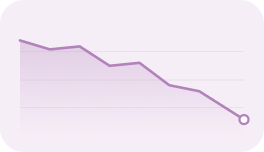
A short position through derivatives can seek to benefit from a fall in the value of an underlying investment or express a portfolio view.

Derivative positions can increase both the flexibility and the complexity of a strategy; investors should understand how derivatives may affect gains and losses.
Key risks investors should understand

Market risk
The value of investments can rise or fall due to market movements.

Strategy risk
A differentiated strategy may behave differently from conventional Mutual Fund categories.

Derivative risk
Derivatives can magnify gains or losses and may introduce additional complexity.

Liquidity risk
Some strategies may have less frequent redemption opportunities or notice periods.
Credit risk
Debt-oriented strategies may be exposed to changes in the credit quality of issuers.
Interest-rate risk
Debt securities can be affected by changes in interest rates.
Concentration risk
Strategies focused on sectors, segments or particular investment themes may have higher concentration.
Operational / implementation risk
The outcome depends on how the strategy is implemented within its stated mandate.
Risk-band
SIF investment strategies use a five-level Risk-band, ranging from Level 1 (Lowest Risk) to Level 5 (Highest Risk). Investors should review the Risk-band together with the strategy objective, portfolio characteristics and other disclosures before investing.
Investor Awareness: Before You Invest in a SIF
A simple investor checklist
8/8
Understand the strategy: Know what the SIF is trying to achieve and the types of securities or derivatives it can use.
Check the Risk-band: Review the prescribed risk level and understand the key risks behind it.
Understand liquidity: Check subscription and redemption frequency and whether any notice period applies.
Understand derivatives: If the strategy uses derivatives, understand whether they are used for hedging, rebalancing or short exposure.
Check the minimum investment: The aggregate SIF investment threshold is ₹10 lakh at PAN level, subject to applicable exceptions.
Assess suitability: Consider your investment objective, risk appetite, investment horizon and ability to tolerate losses.
Read the ISID: Review the Investment Strategy Information Document and other offer documents before investing.
Do not rely only on past performance: Past performance does not indicate future results.
Frequently Asked Questions
No. A SIF is a distinct investment product within the SEBI-regulated mutual fund framework, offering specified differentiated investment strategies.
No. SIFs remain pooled investment vehicles, whereas PMS generally involves an individual portfolio for the client.
No, ₹10 lakh is not required for every individual Specialized Investment Fund (SIF) strategy. SEBI mandates a minimum aggregate investment of ₹10 lakh at the PAN level across all SIF strategies offered by a single Asset Management Company (AMC).
Yes. The permitted strategies can use derivatives subject to the applicable regulatory framework and strategy mandate.
Risk varies by strategy. Investors should consider the specific strategy's Risk-band, portfolio, investment approach and risk factors rather than treating all SIFs as identical.
Redemption terms vary depending on the investment strategy and are disclosed in the relevant ISID. Redemptions may be subject to a notice period and other applicable terms and conditions.
SIFs are intended for investors seeking differentiated investment strategies and who are comfortable with the associated level of complexity, risk, volatility and minimum investment requirements. Since some SIF strategies may experience higher short-term volatility and fluctuations in value, they may not be suitable for first-time investors or those who are not yet familiar with market risks. Investors should have a clear understanding of their risk appetite and investment horizon before considering a SIF.
Things to Consider Before Investing
SIFs are market-linked investments and carry investment risks. The suitability of any strategy depends on the investor's objectives, risk appetite, investment horizon and the specific strategy's mandate. Investors should read all scheme-related and statutory documents carefully before investing.