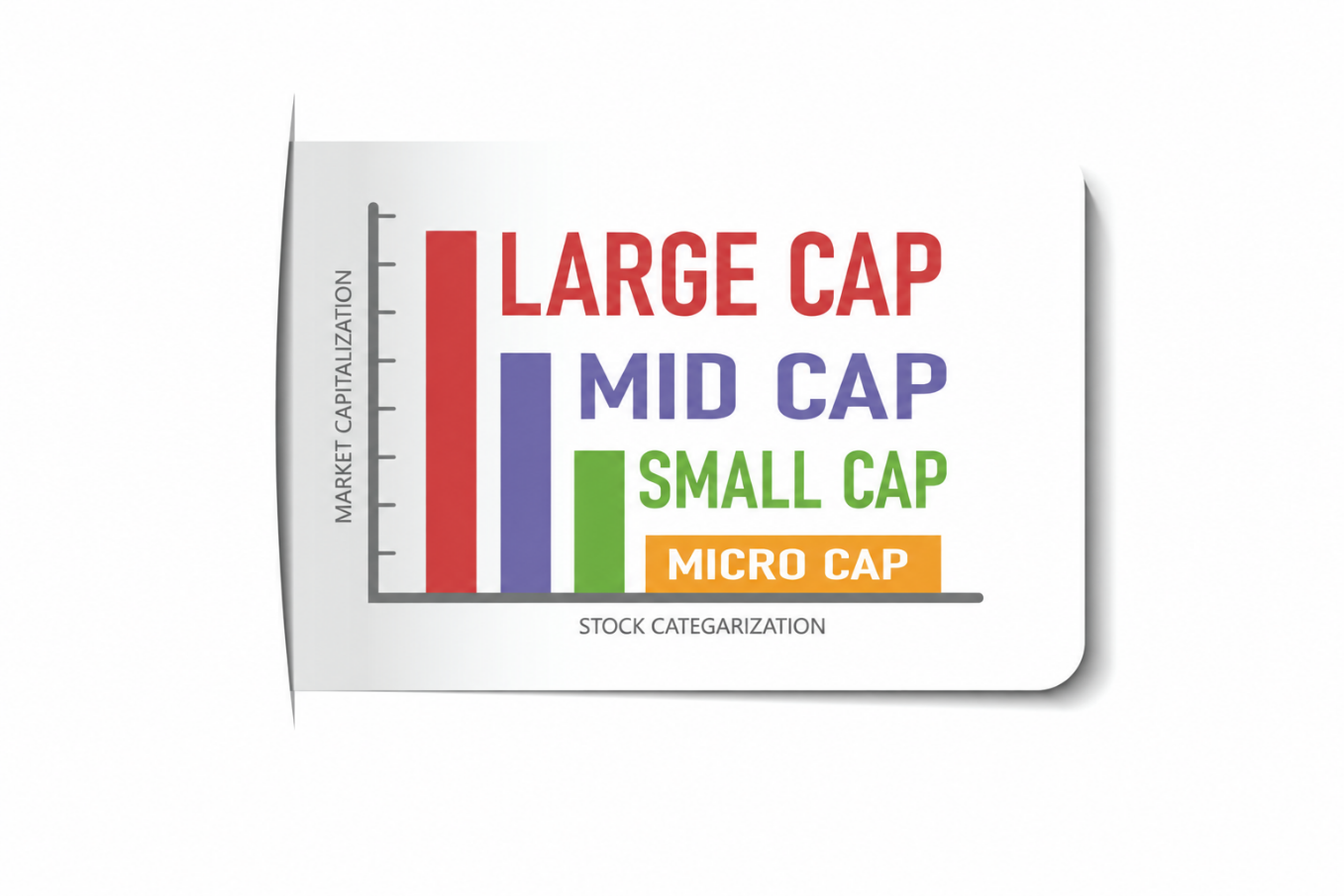


Large cap and mid cap stocks can behave differently across market conditions. Large cap funds may exhibit relatively lower volatility, but may not provide the high growth potential of mid cap schemes, especially during favourable market cycles. On the flip side, the high interim volatility associated with mid caps may not suit every investor’s risk appetite.
A large and mid cap fund combines exposure to both segments within one equity mutual fund scheme. This article explains what a large and mid cap fund is, how it allocates its assets, and the factors investors may consider before investing in this category.
What is a Large and Mid Cap Fund?
As per SEBI’s classification, large and mid cap funds are equity funds that are mandated to invest at least 35% of their assets each in large cap and mid cap stocks. The residual portion may be allocated as per the scheme’s investment mandate and applicable regulatory limits.
Large cap companies are the top 100 listed companies based on full market capitalisation, while mid cap companies are ranked from 101st to 250th. Large cap stocks are typically more stable owing to the established nature of the businesses, whereas mid cap stocks may offer the potential for higher growth over a long horizon, albeit with more short-term volatility.
Large and mid cap funds bring these two segments together, giving investors a balance of relative stability and growth potential within a single fund. Large cap and mid cap stocks are both equity investments and can experience significant volatility. Both are subject to market risk. Hence, the Riskometer level of large and mid cap schemes is typically “Very High”.
Investors must always evaluate their objectives and risk appetite before considering an investment.
Benefits of Investing in Large and Mid Cap Funds
-
Balance of Growth and Stability
Large and mid cap funds invest in both established large companies and growing mid-sized companies. The two segments may have different growth and volatility characteristics, although combining them does not guarantee portfolio stability or superior returns.
-
Diversification Across Companies and Sectors
Investing across two market cap segments can broaden the fund’s market cap exposure. However, actual diversification may vary between different large and mid cap funds and depends on the number of holdings and the portfolio’s sector concentration.
-
Different Behaviour Across Market Cycles
Holding both segments within one scheme can provide exposure to differing patterns of return and risk.
-
Professional Fund Management
These funds are managed by professional fund managers who select and monitor investments in accordance with the scheme’s stated investment objective and strategy.
-
SIP Facility
Systematic Investment Plans (SIPs) are an automated and affordable way to invest systematically. SIPs can potentially help investors leverage rupee cost averaging and the power of compounding over time. An SIP calculator can illustrate possible outcomes using assumed returns, but its results are not predictions. SIPs do not guarantee profits or remove market risk.
Investment Strategy of Large and Midcap Funds
-
Market Cap Allocation
A fund’s market cap allocation gives an idea of its investment approach. A higher allocation to large cap stocks generally makes a portfolio less volatile, while greater exposure to mid and small cap stocks can make the fund riskier but more growth-oriented.
Large and mid cap funds are required to invest at least 35% of their assets in large cap stocks and another 35% in mid cap stocks. The residual assets can be invested across other categories, including small cap stocks, subject to the scheme mandate.
-
Portfolio Turnover Ratio
The portfolio turnover ratio shows how frequently a fund manager buys and sells stocks.
A ratio above 100% generally indicates substantial portfolio activity, but it does not mean that every holding was replaced. A high or low turnover ratio is not necessarily better or worse. It mainly reflects the fund manager’s investment strategy and how actively the portfolio is managed.
-
Number of Stocks in the Portfolio
The number of stocks in a fund tells you how diversified or concentrated its portfolio is. A portfolio with fewer holdings is more dependent on the performance of each holding. This concentration can magnify both potential gains and losses. Investors can also examine the weights of the largest holdings and the level of sector concentration.
Things to Consider Before Investing in Large And Mid Cap Funds
-
Investment Goal
Since large and mid cap funds are equity mutual funds , they are aligned with long-term investing. Investors should assess whether the expected holding period, investment objective and capacity to handle volatility are consistent with the scheme’s risk profile. A longer holding period can provide more time to withstand market cycles but does not remove market risk.
-
Risk
Large and mid cap funds are rated “Very High” on the Riskometer. Hence, their returns can fluctuate, especially over the short to medium term. Investors must assess their capacity for handling declines without redeeming their investment.
-
Expense Ratio
Operating an active fund like a large and mid cap fund involves various costs, such as fund management, administrative and other expenses. These costs are recovered from investors through the fund’s total expense ratio, which is expressed as an annual percentage of its daily net assets.
These expenses are reflected in the NAV and reduce investor returns. Investors may compare expense ratios while also accounting for differences between direct and regular plans.
Taxation of Large Cap and Mid Cap Funds
Large and mid cap funds generally qualify as equity-oriented mutual funds for tax purposes.
-
Units held for up to 12 months are treated as short-term capital assets with short-term capital gains taxed at 20%.
-
Units held for more than 12 months are treated as long-term capital assets with long-term capital gains taxed at 12.5% beyond the ₹1.25 lakh annual exemption.
Applicable surcharge and health and education cess are additional.
Investors should also consider any applicable exit load when planning to redeem their investments.
Since mutual fund tax rules can change from time to time due to government and regulatory updates, investors should check the latest tax rules and consult a tax advisor for accurate and up-to-date information before making investment or redemption decisions.
Conclusion
A large and mid cap fund provides exposure to large and mid cap companies within one actively managed equity scheme. While the large cap allocation may provide relatively lower volatility, the mid cap allocation may offer higher long-term growth potential. However, these schemes are classified as “Very High” risk on the Riskometer. Investors should therefore evaluate their objectives, horizon and risk appetite before considering an investment.
Mutual Fund investments are subject to market risks, read all scheme related documents carefully.